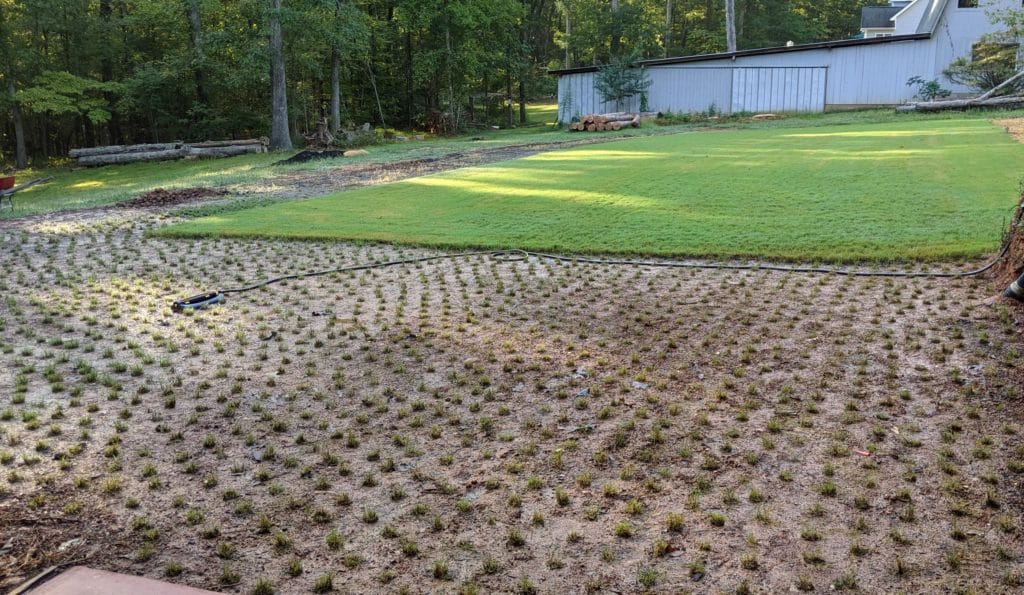

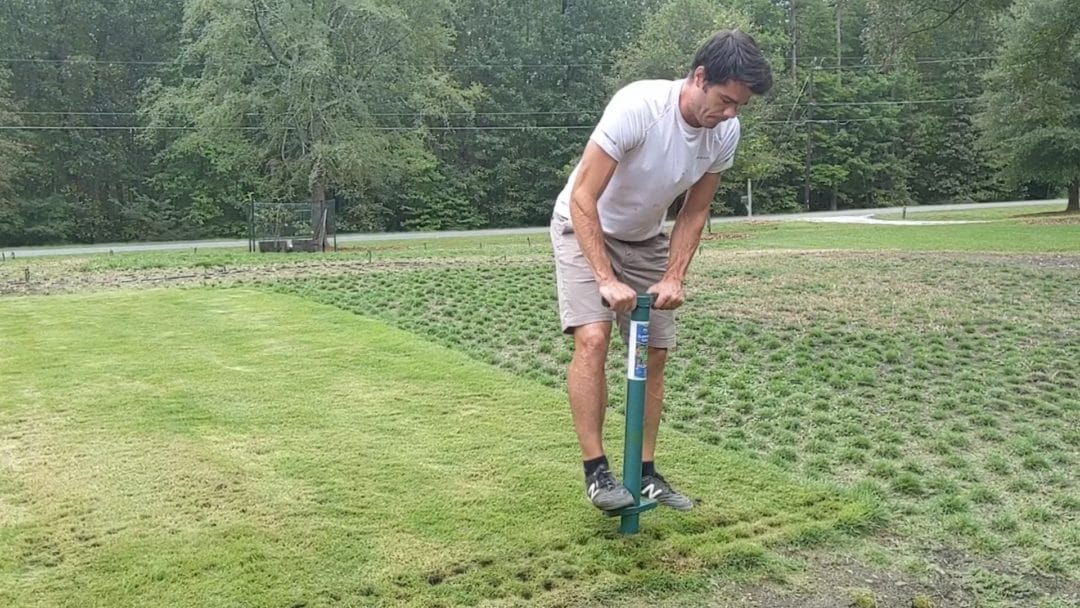
Introduction: Step by step instructions for planting grass plugs from sod with the ProPlugger (usually zoysia, bermuda, or centipede grasses)
Watch the video or follow the directions below
Directions
Step 1: Lay the sod of your choice
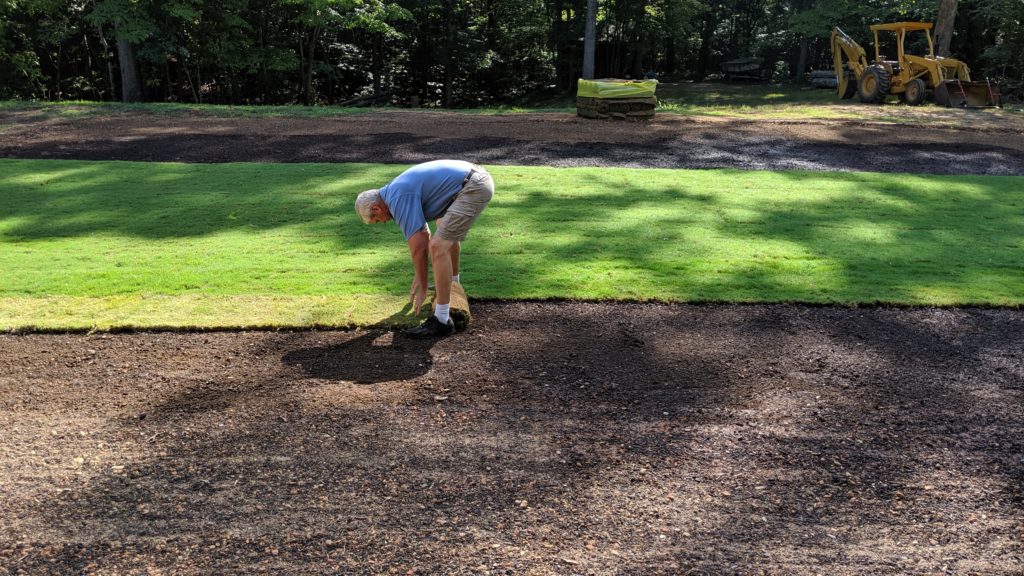
- Zoysia, Bermuda, and Centipede are common sod grasses that can be plugged because of their ability to spread.
- We don’t recommend plugging St. Augustine, because it tends to fall apart too easily during the process.
- Plant the sod according to the instructions given to you by your sod supplier.
- Wait 3 weeks for the sod to root in before plugging.
Step 2: Kill the grass or weeds in the area that you will be planting the plugs
Herbicides
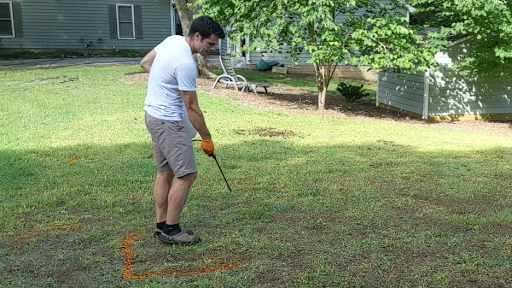
- Glyphosphate
- This kills all the existing vegetation, but not the weed seeds that are in the ground.
- The original brand name is Round-Up, but there are many formulations.
- I use Hi-Yield Killzall.
- Follow the directions on the label for mixing and spraying.
- Spray the area, wait a week, spray the area again, wait a week and it should be ready for plugging.
- Ronstar
- Ronstar will prevent weed seeds from sprouting.
- It is a little expensive, but significantly reduces weed growth.
- Spread it out a week before plugging.
Tilling
- This will get rid of your existing grass without the need for chemicals.
- It does not kill weed seeds.
Solarizing
- Solarizing involves tilling, watering, and then covering an area with clear plastic during the summer for at least 4 weeks. This is a more involved process but has the added benefit of killing weed seeds in the soil.
Step 3: Water the sod and planting area the night before plugging
- Moist soil is much easier to plug than dry soil, particularly if your soil has a heavy clay content.
- Don’t over water. If soil gets too saturated, the plugger may clog up, or plugs may have difficulty coming out of the ground.
- Here is a link on how to deal with clogs while using the ProPlugger.
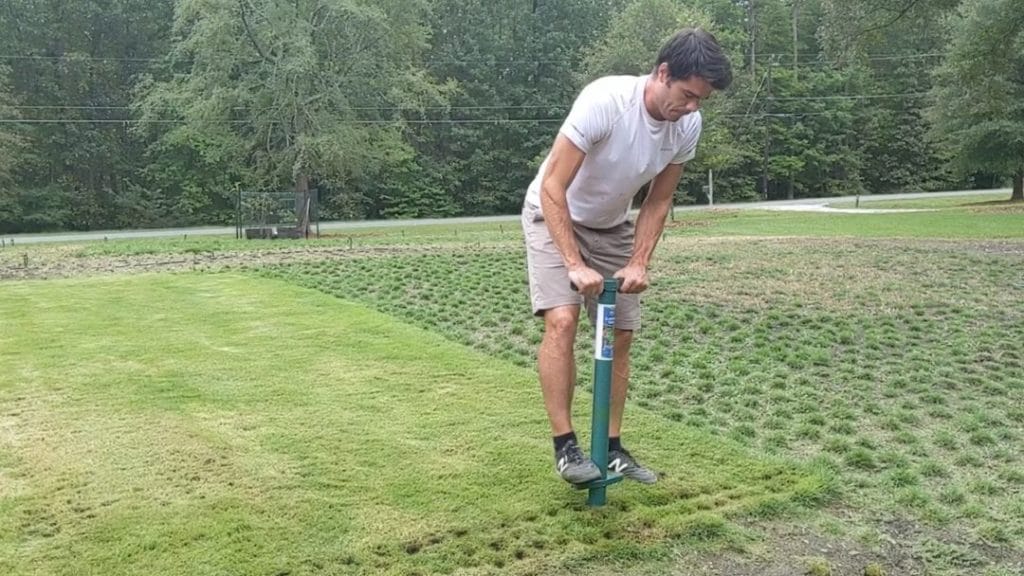
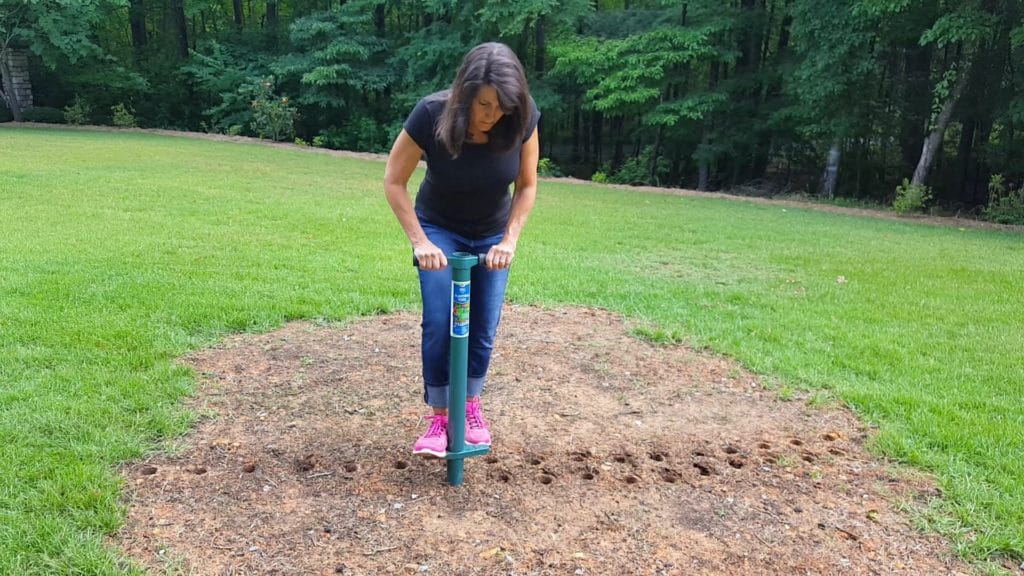
Step 4: Take plugs out of the area to be planted every 6″ apart
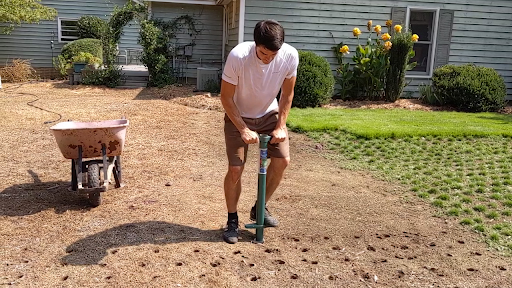
- Use the 2” depth ring.
- The 4″ depth ring can also be used if you are transplanting from established grass and want to capture more of the root system.
- Dump the soil collected in the tool into a wheelbarrow.
- If you suspect the soil contains weed seeds, you probably won’t want to reuse the soil to fill the transplant holes.
- If the soil doesn’t contain weed seeds in it, you can keep this soil for Step 8.
Step 5: Harvest plugs out of the sod every 3″ apart
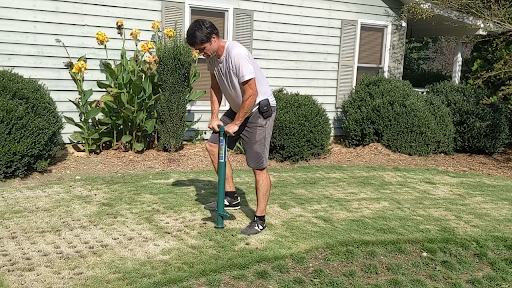
- Taking plugs out of sod can be easier if you mow it relatively short before pulling your transplant plugs.
Step 6: Take the harvested plugs over to the transplant (planting) area
- To keep your grass plugs from crumbling when you transport in a wheelbarrow, take the following precautions:
- Don’t stack plugs too high as the weight of plugs can crush the ones underneath.
- Carefully dump the plugs on the ground, or take them out of the wheelbarrow by hand.
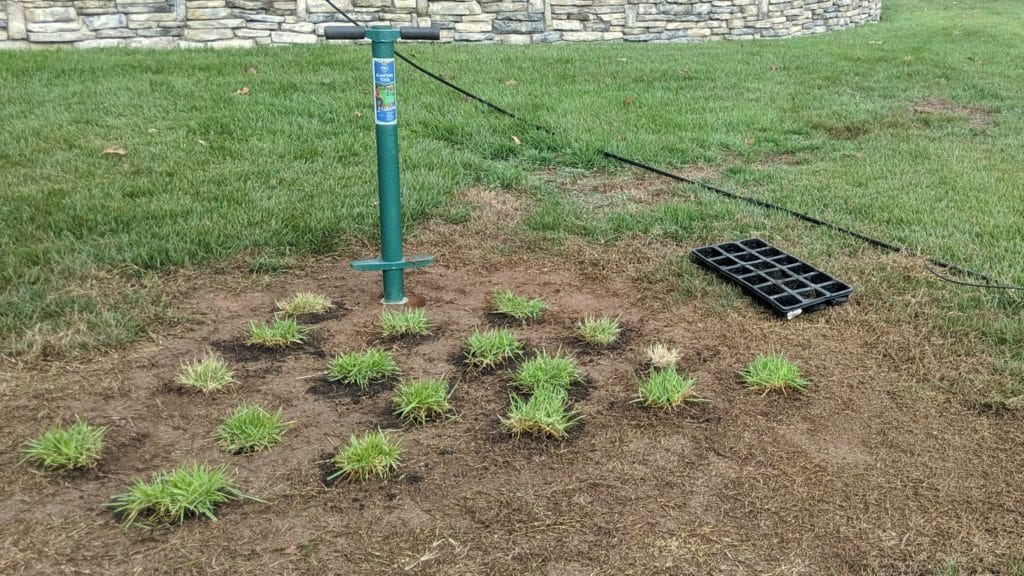
Step 7: Plant the grass plugs
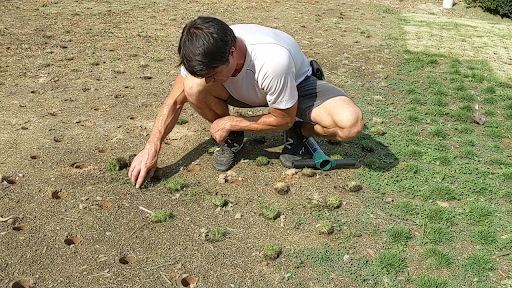
- Occasionally, you can run into rocks or roots when plugging your planting holes, which can leave you with a planting hole that is too shallow for the new transplant plug. If this happens:
- Remove some soil from the bottom of the plug to better match the transplant hole.
Step 8: Refill the holes where you harvested your plugs from the sod
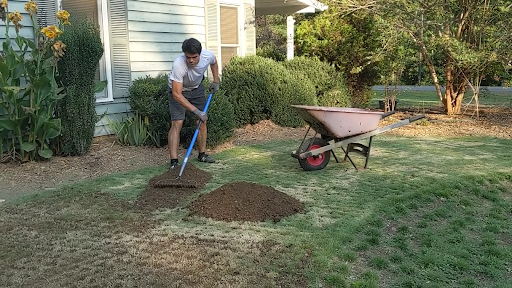
- Use a commercial soil mix, or the soil from the transplant are as long as it doesn’t have weed seeds in it.
- Rake it back and forth until it fills the holes.
Step 9: Water the newly transplanted grass plugs and the sod area
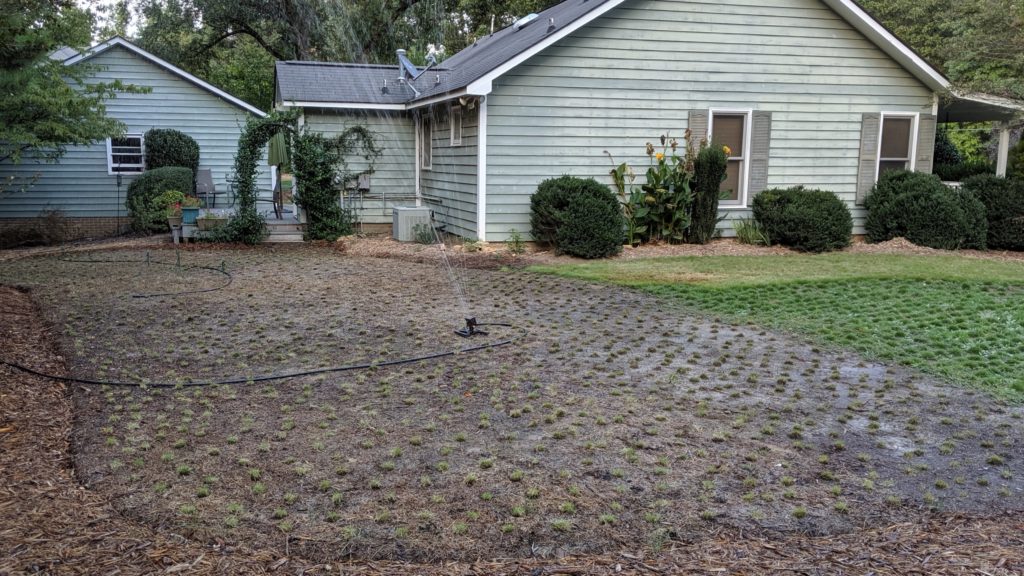
- Water newly transplanted plugs as you would new sod.
- Weeks 1 – 2: 3 times a day for 20 minutes
- Week 3: 2 times a day for 20 minutes
- Week 4: Once daily
- Thereafter: Follow the normal watering recommendations for the variety of grass you are plugging.
- This is the schedule I use, but you might need to adjust for your climate and your soil type.
- These links will help you determine your watering schedule.
- Use a watering timer.
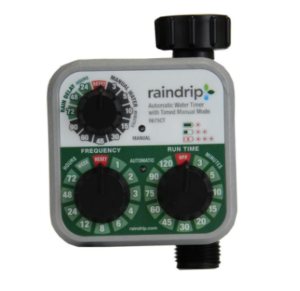
- You can purchase timers online or at home improvement stores.
- They can be a bit tricky to learn at first, but once you get the hang of it they are invaluable time savers.
- Use sprinklers that are adjustable in both directions.
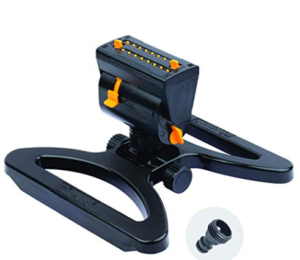
- This model makes the spray pattern more adjustable and thus more accurate.
Step 10: Water the donor area (sod where you harvested your plugs for transplant)
- Water twice a week for 3 weeks.
- After that just follow the normal watering directions for your grass you are plugging.
Step 11: Allow 6 weeks for the donor area sod to regrow. It should be ready for more plugging
- You can plant an area 3 to 4 larger than the donor area from which you pulled your transplant plugs:
- For example: If you have 1 pallet of sod (~450 sq ft) you can plug about 1,200 – 1,600 sq ft.
- Harvest your transplant plugs every 3” apart and plant them every 6” apart.
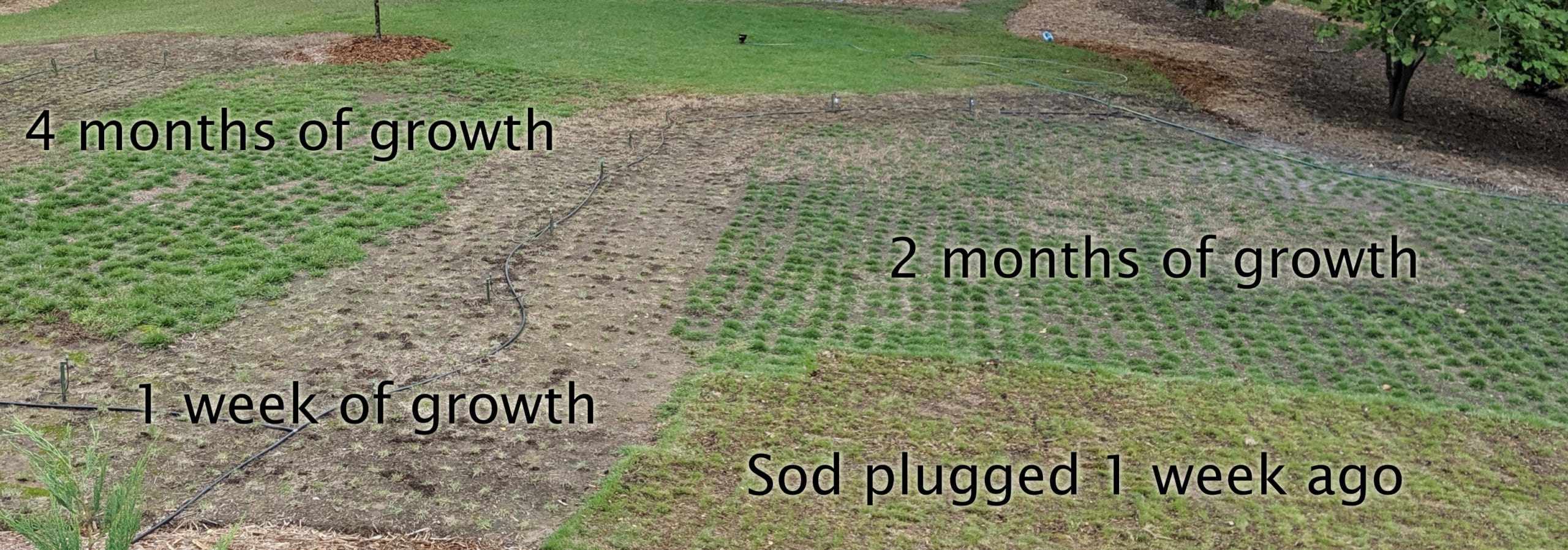
- Transplanted plugs usually fill in within 1 year, though it may take 2 years depending on your growing conditions.
Additional Information
Follow this link for additional, more detailed information